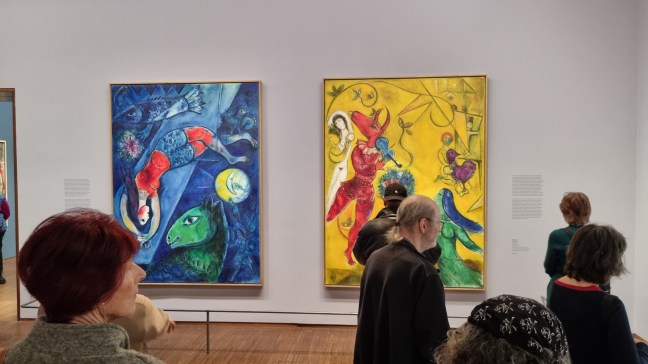
At the beginning of January 2025 (yaaay, starting my year with some art!) my family and I visited Vienna in Austria to see Marc Chagall’s exhibition in Albertina. I have to say I was familiar with his work, however not in as much detail as some other artists of his time, so it was very educational for me to see his kind of retrospective with more than 90 artworks through all his creative periods.
Usually when we discuss modernists, we talk about Matisse and Picasso and we don’t mention Chagall (1887-1985) as much. Or is that just my experience?? I learned so many new things about him and his art that I didn’t know before, so I am really glad we came all this way.
For example, did you know he was born in Vitebsk (today’s Belarus, but then in Tsarist Russia), where Jews were allowed to reside in very poor circumstances – and yes, he was one of them, as we see in his art and the motifs that accompany him throughout his life. He was a lifelong wanderer and lived in exile for all his life, also in Paris and in USA, but always looking back to his childhood home.
You can’t miss Chagall when you see his defining colours and symbolism in his paintings. Also some kind of magical elements with animals being bigger than people, for example, with the height showing who is more important for the story of the painting, completely disregarding the academic rules of perspective and realism. And what I will probably mention a few times: no matter his vivacious colours, you can sense the sombreness inside – but not at first look, you really have to dig deep to actually notice these thoughts.

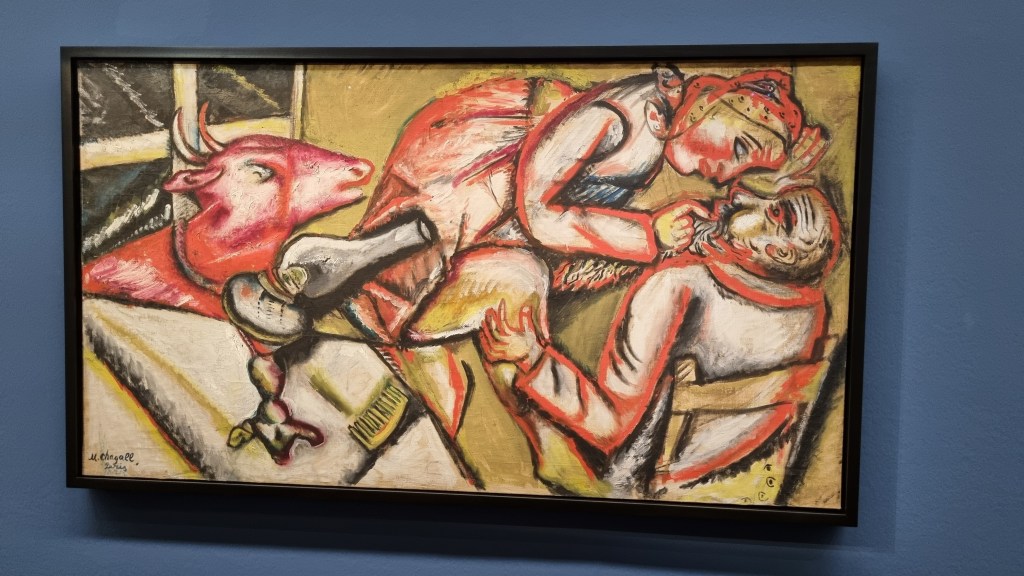

‘It is the conflictful experience of joy and suffering that characterizes this work, cheerful and buoyant as it is, though without leaving out the dark and menacing: love, dance and play in times of persecution and displacement.’ Again, his paintings might look happy when you glance them, but in reality they hold very looming messages.
Chagall was very expressive in his unrealistic use of colour, large shapes, sharp contours and curious compositions, drawing the inspiration from cubism and fauvism. His motifs were the same during his whole artistic career – so much so, that we had a huge conversation with my family on how did he not get bored of painting the same things over and over and how did he not get any better at it. And why is he revered as a good artist, because honestly, anyone could do that.. I will reply my thoughts on that a bit later on, but just a food for thought for you..
Marc Chagall grew up in a Hasidic Jewish environment (ultra otrhodox, emphasizing piety and emotional spiritual expression in prayer and worship, with devotion being more important than study of Torah) and that mysticism of Hasidism ‘seeking to open the soul through dance and music’ had a huge influence on him. He started with painting the everyday life, with violinists being a big part of his opus (belief that it is possible to achieve communion with God through dance and music).
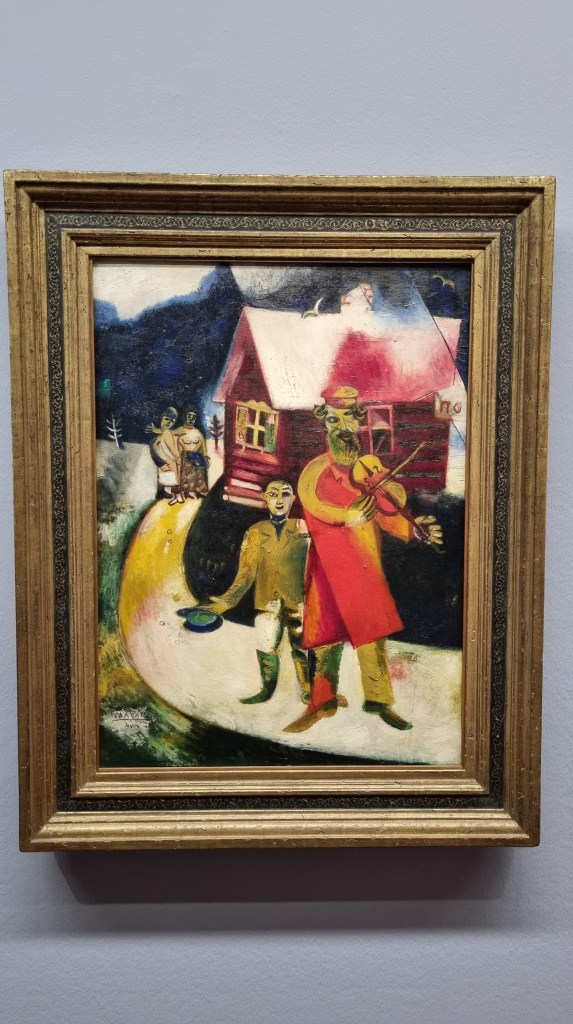


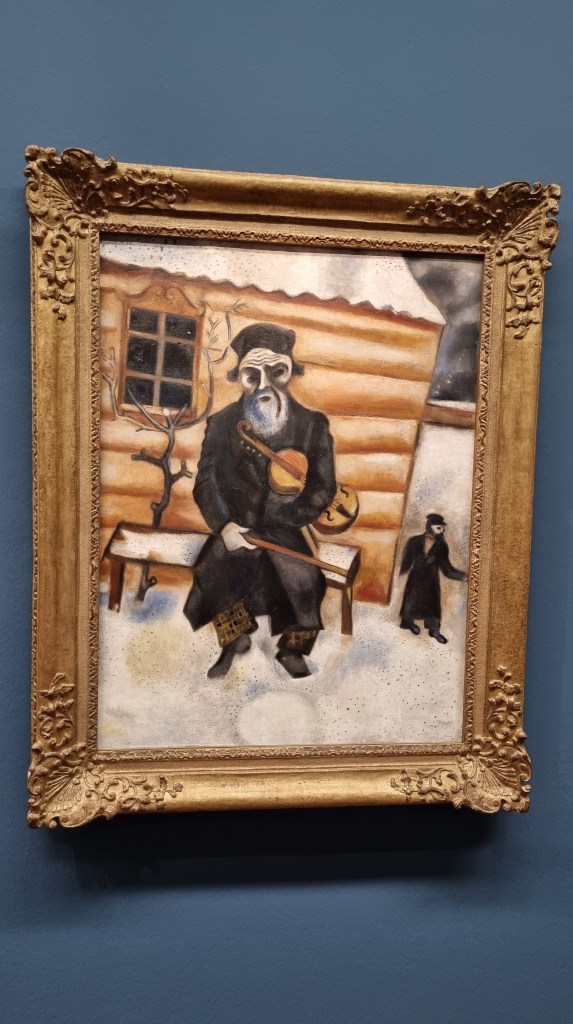


He got a scholarship and moved to Paris in 1910, to the centre of the avantgarde movement. The artist never ‘threw away’ the themes he brought with him from his homeland, but continued to use them in his usual style, now mixing modern Parisian art with the burlesqueness of Russian folk art.
Chagall’s painting might sometimes seem out of balance, even like a puzzle. So, you can stand in front of the painting and every single time you look at it, you will see something else. Even though some paintings might be very fragmented and not that much detailed, you can build your own story when you put the pieces together. He was also dabling in surrealism, before that was even a recognized thing.
The socially critical and provocative nature of his works has often been overlooked, as his paintings might be perceived all nice and positive, but in reality they are a reflection of personal experiences and world political events, escpecially when it comes to Jewish themes, balancing them with ’empathy for contemporary sentiment and a timeless statements about a never ending hopelesness and persecution.’
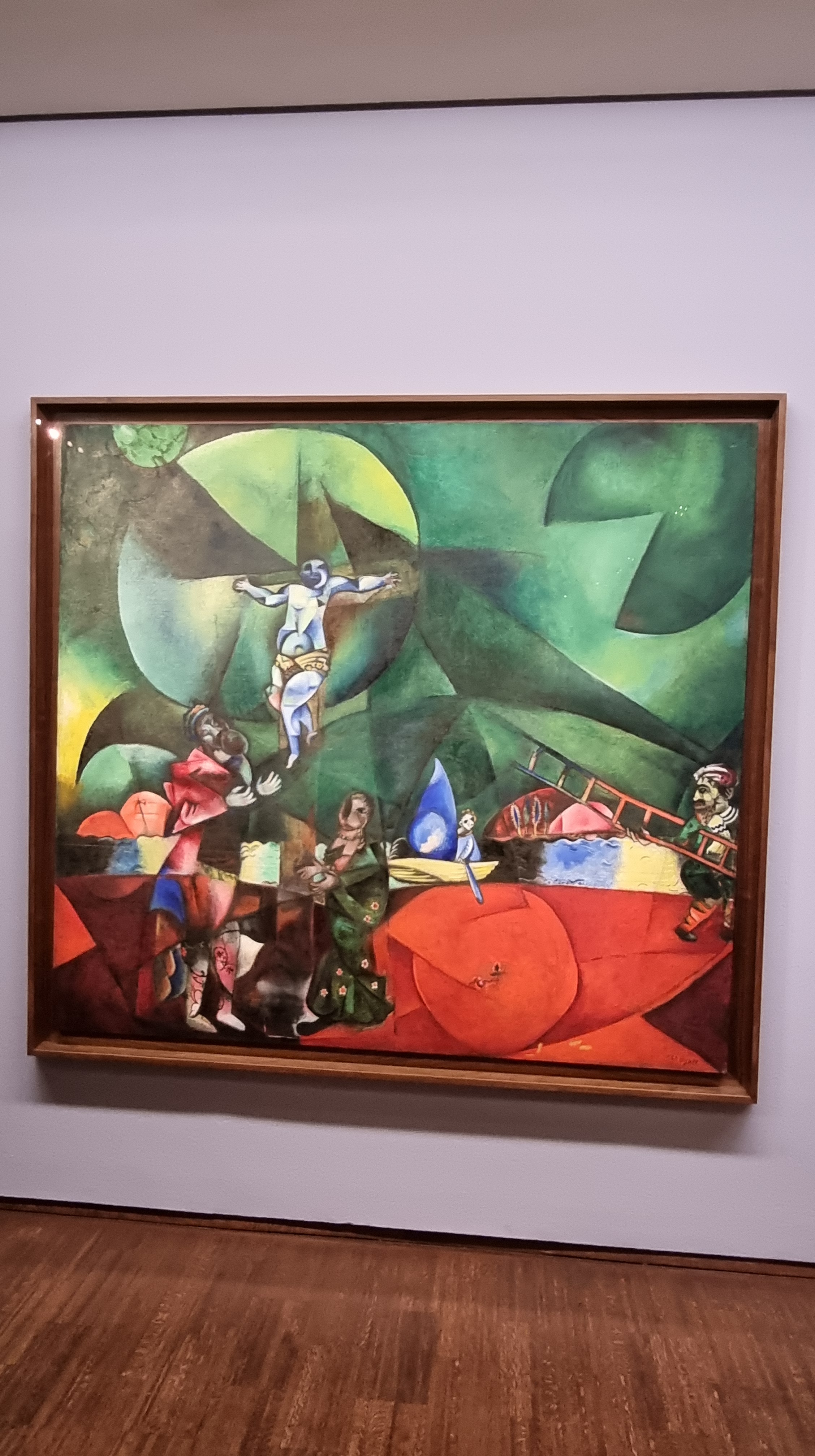
Throughout different eras he was painting the same motifs (lovers, violinist, rooster, cow, goat, bull, fish, rabbis, clowns, flowers, topics of Jews etc.), but with different atmospheres, some more melancholic, some happier. But regardless of the colours, he always brings in something positive into his world. He is saying that eventhough everything might be sh*t, the sun is still shining. He is very known for combining realism with abstraction and contrasts with the colours and backgrounds.
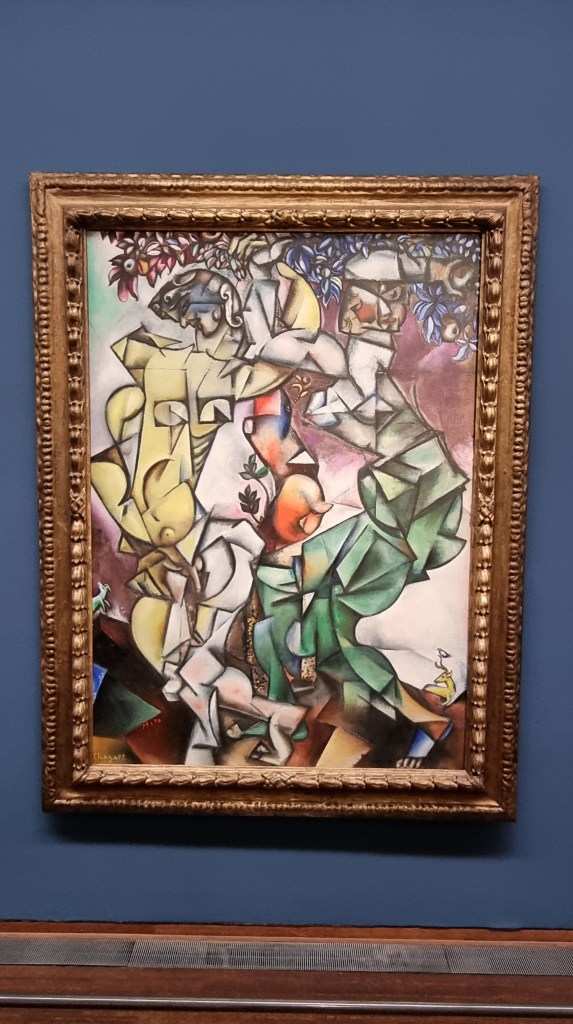
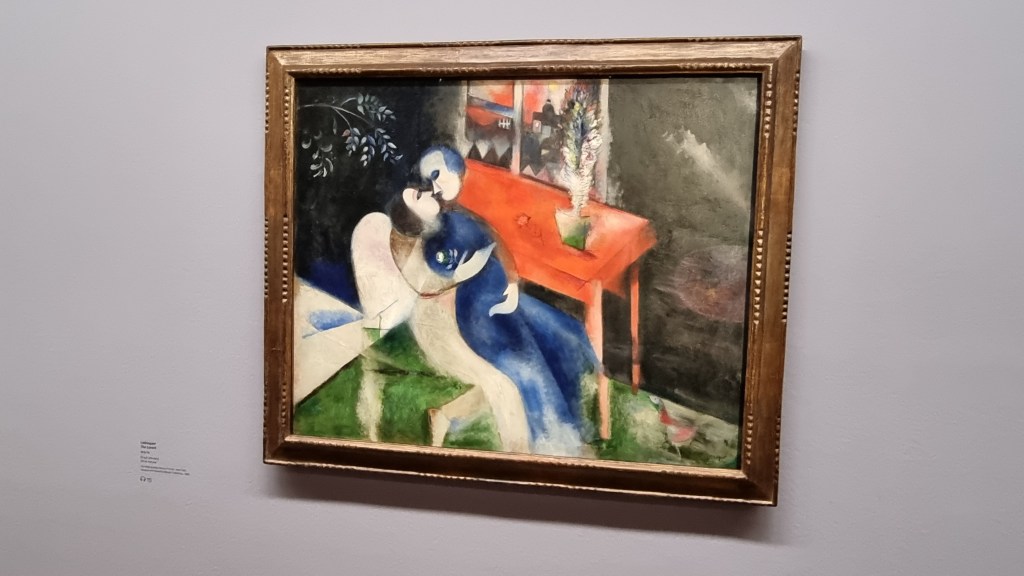


Chagall returned to Vitebsk for a holiday in 1914, but had to stay in Russia for 8 years, because of the outbreak of WW1. His then wife Bella became his new muse and a central motif of his art. He also kept depicting the simple everyday life and Russian folk art. Traditional abstractionism with Malevich at the head of the movement, which was in full swing then, did not really touch him. That’s why Chagall’s art was declared old-fashioned. Even when he was using fauvism, cubism, futurism and expressionism together, he always stayed very narrative in his content. Bitter and irritated he moved back to Paris.


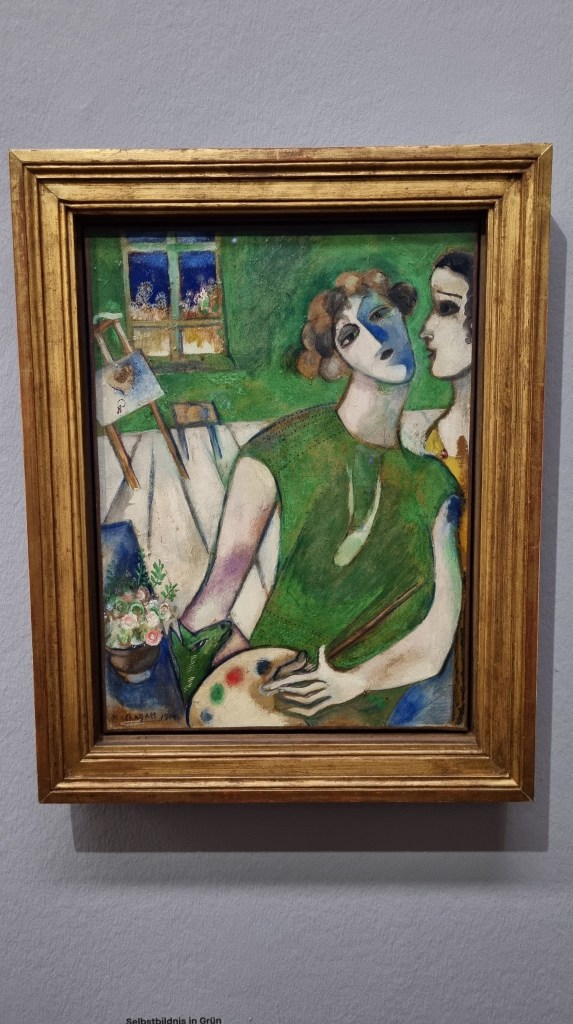
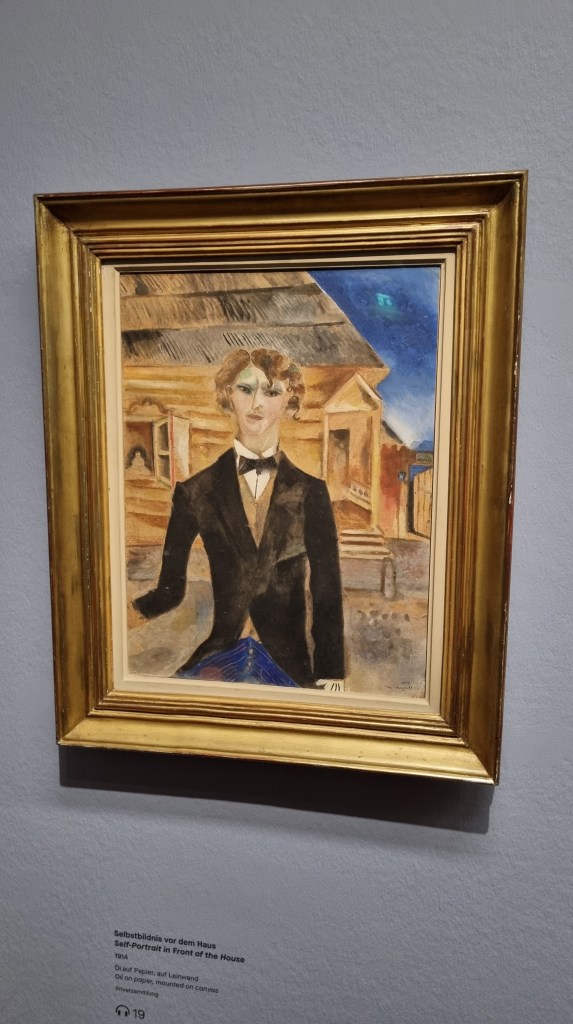
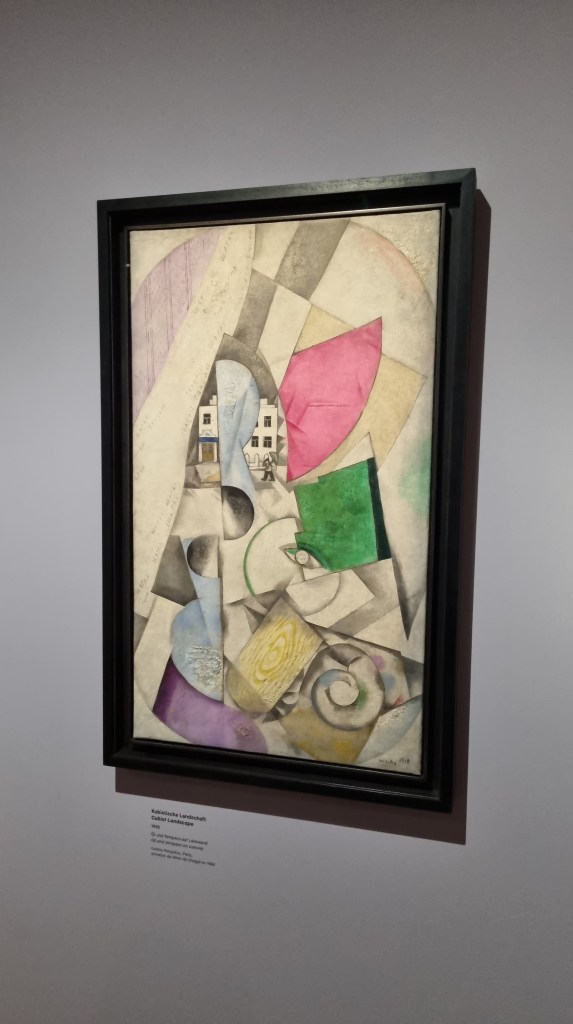
Hitler declared Chagall a ‘degenerative artist’ (Nazis suppressed modern art styles and promoted art with national and racial themes) and loads of his paintings were burned. In 1941 he decided to go to exile to New York, where he started reworking on the old paintings he brought with him, as well as redoing the ones that were lost. Soon after the move, the love of his life Bella passed away, which was very hard for him, as he lost a piece of his home through that – he felt even more as a foreigner in a foreign land. The feel of his themes of lovers and weddings changed – what was before a celebration of love and happiness, was now filled with melancholy and the feeling of passing. Not floating in love anymore, but floating away.
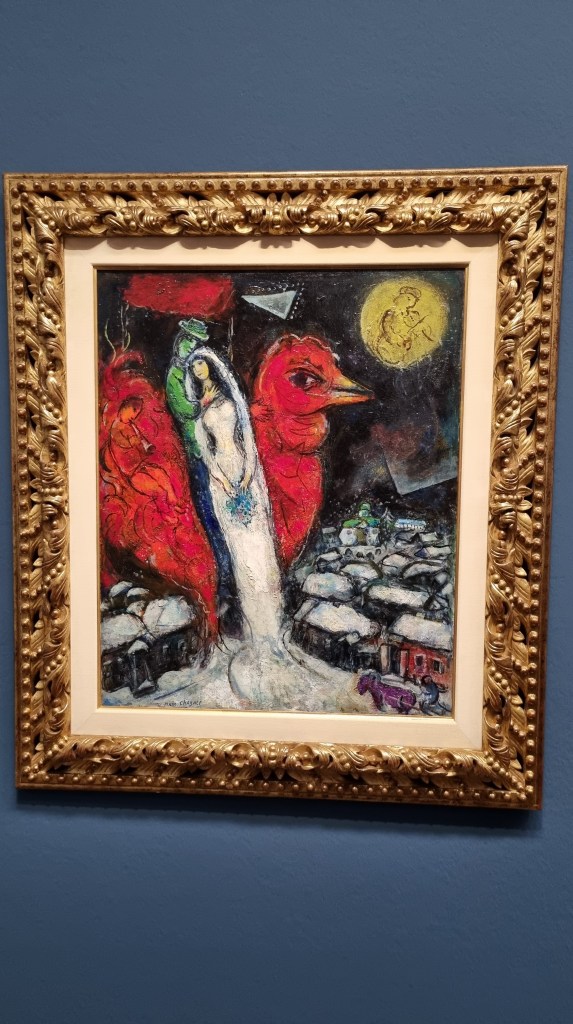


As mentioned many times before, Chagall’s whole artistic practice was in a way just repetitions and new versions and recreations of the same paintings. He was repeating motifs, creating new contexts for them and always returning back to his early stylistic stages. So when you see his painting, you can always know who is the artist. Honestly, if the paintings in exhibiton were mixed, not in a chronollogical order, it would be very hard for a visitor to decipher from which of his eras the paintings are – only by the feel emanating from them and some minor stylistic changes (monochrome red and blue colour zones reviving the feel of stained-glass windows). Maybe if you studied the size as well – bigger paintings were after his USA era, as when he was in Russia, he didn’t have big canvases to paint on and had to use pieces of paper and had to change the technique. Ok, now thinking about it, you could kind of notice when the paintings were made, but really making a chronollogical order would be a pain in the as* for the untrained eye.
When he returned to his second home, Paris, in 1948, he found a new expression: uniting of what was separated and depicting the opposites – good, bad, home, second home, love, death, reality, dreams, memories, profane, spiritual, physical, metaphysical etc. but with the same subjects as usual.


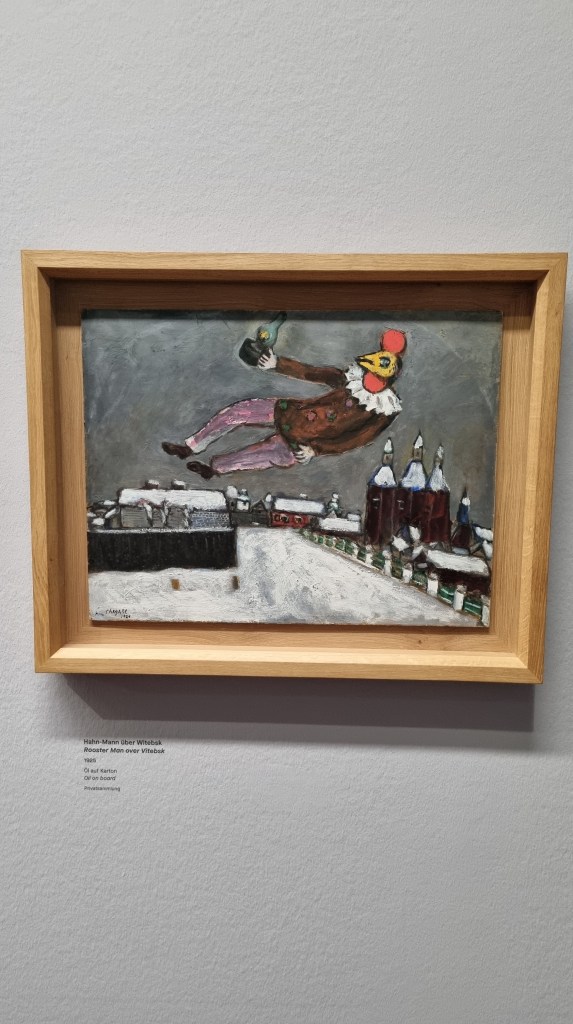


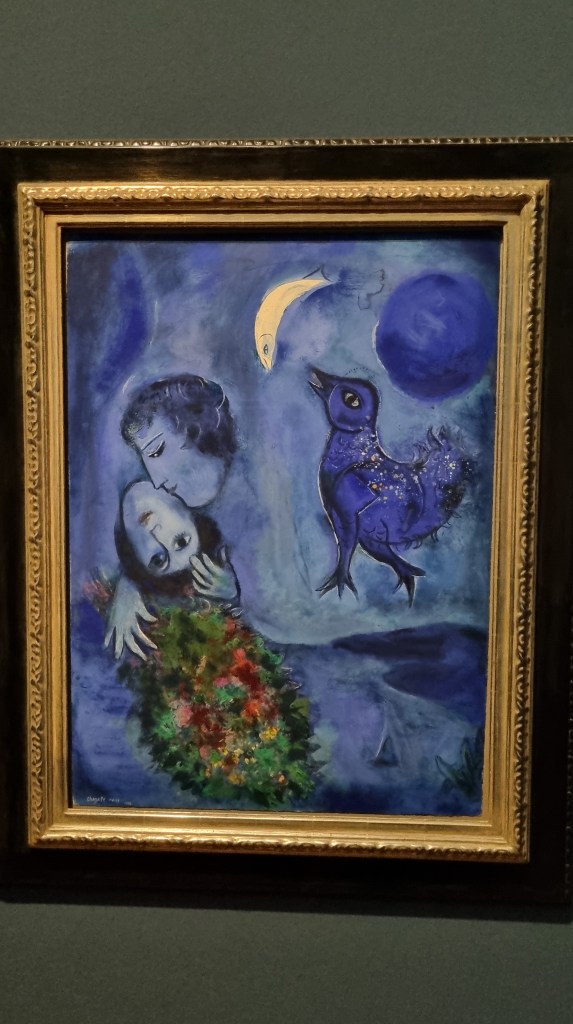


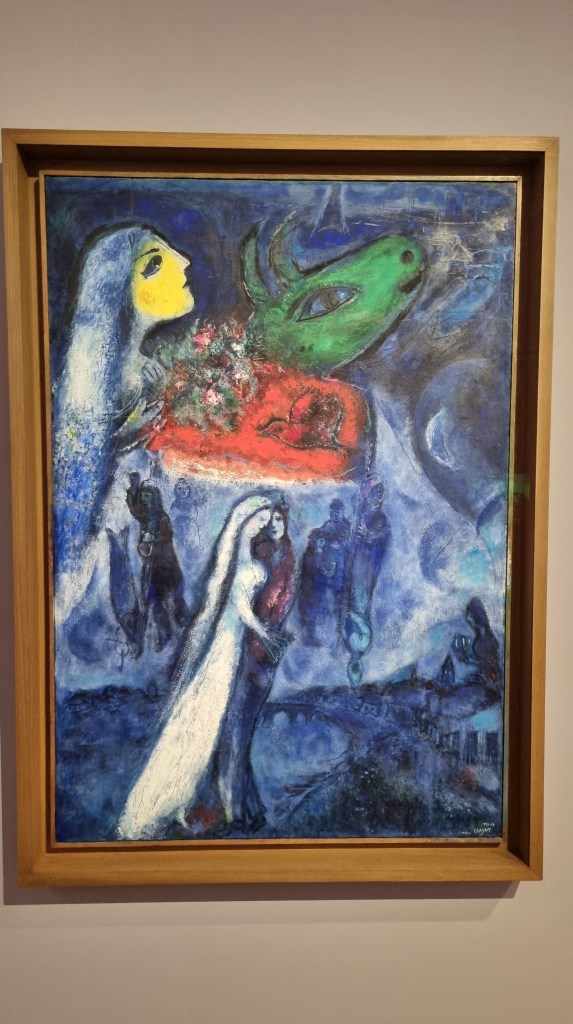

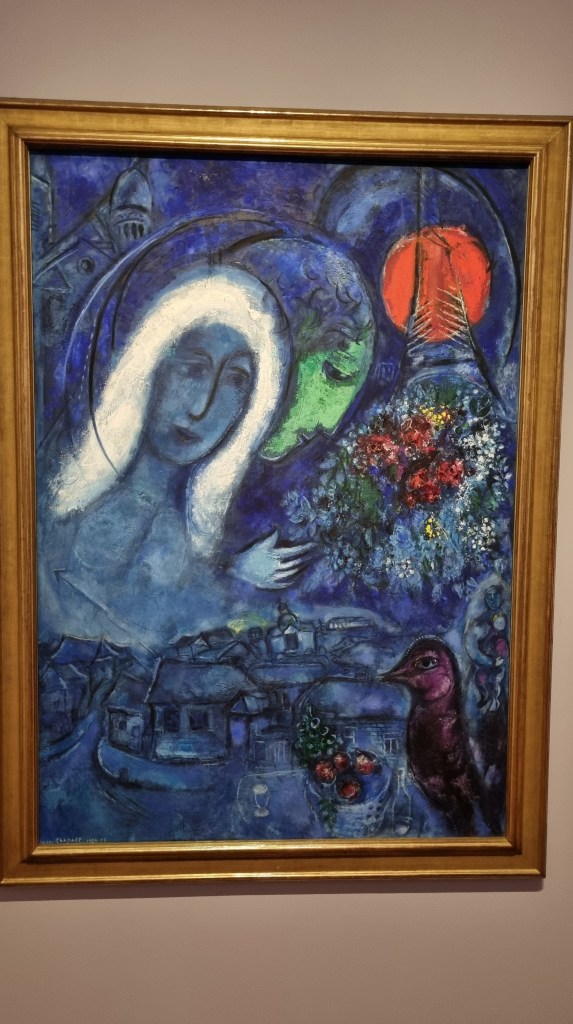


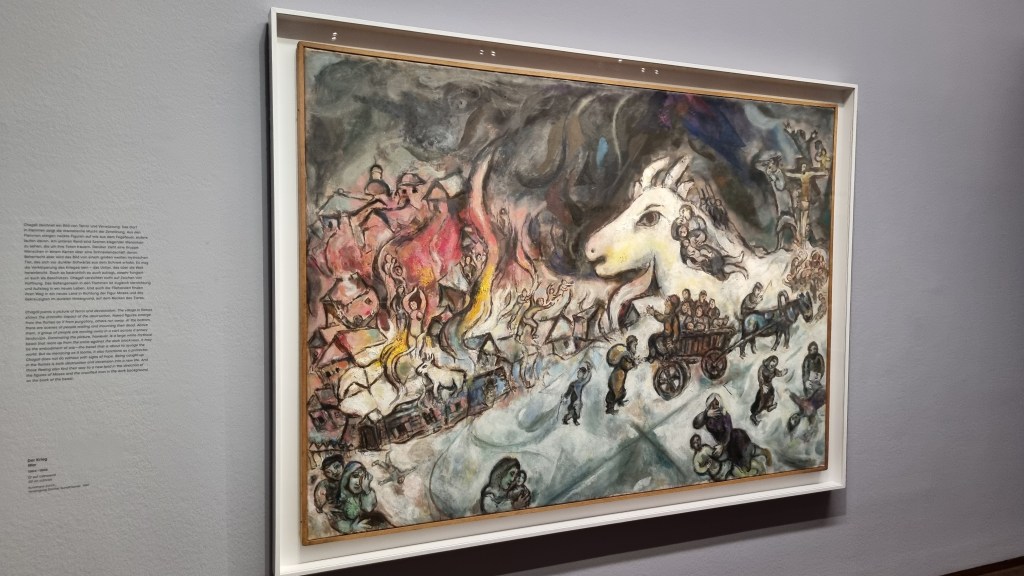


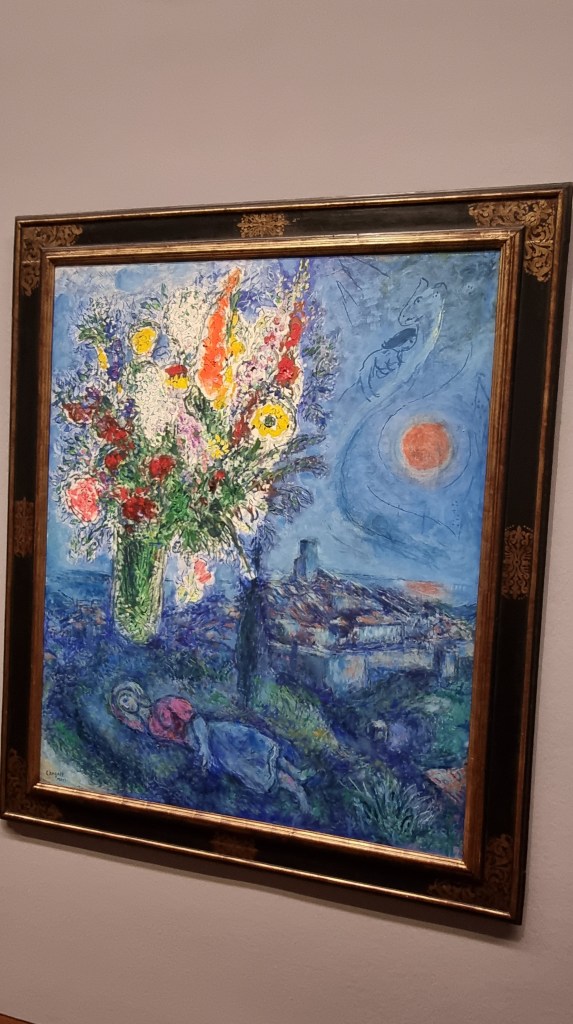
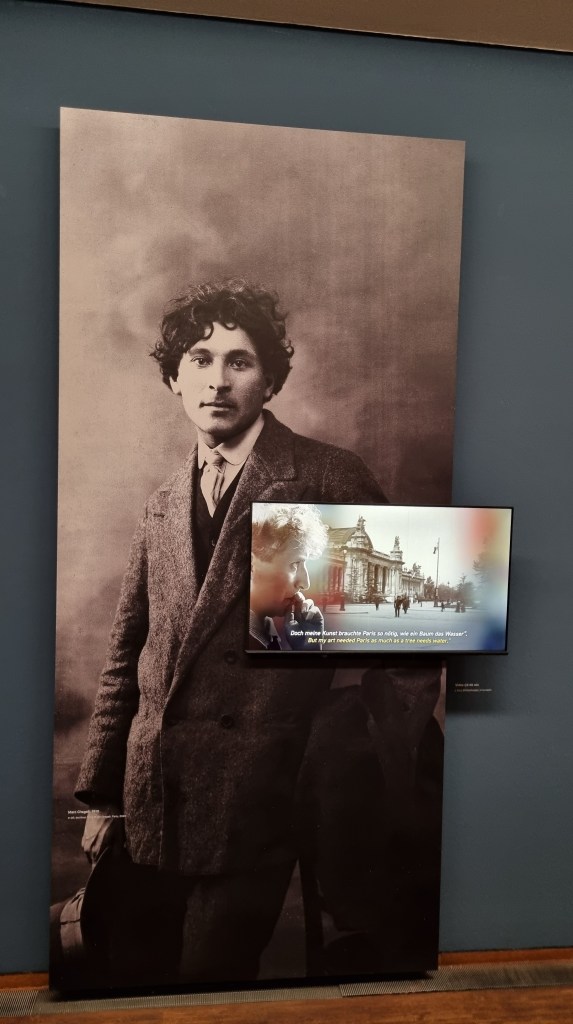
Chagall always wanted to make his paintings artistic expressions of sentiment and refused literal interpretations. For him, art was to be solely an expression of a state of mind and soul, rejecting all the ‘rules’ and connecting together all the isms. Which brings me back to the question of why he was always painting the same things and why ‘he didn’t get better’ at painting them, but refused realism and academicism. That’s why. Because he was not trying to be an academic painter, but painting was a way for him to express himself. ‘He called his painting ‘doucuments’: not in the sense of a reproduction of the visible, but as a testimony to a sentiment that a motif or a subject evokes in him.’ It is curious he himself has also been questioning his talent as an artist through his self-portraits, being filled with doubt and very self-conscious about his shyness, supposed androgenous and feminine looks (by the way, he was pretty cute, looking at his photos) but also fearing the new and at the same time longing for it. So, yes, Marc Chagall was a good artist, not just because the art world says so, but because he managed to evoke emotions with his paintings and that is what good art is to me. Always happy to chat more *wink wink*
This exhibition very nicely shows Chagall’s whole artistic path and also why he was actually an artist. I really enjoyed the experience and kudos to curators for bringing all these works together, as well as writing very educational texts with the presented artworks that made the gallery adventure even more pleasant – definitely left with more knowledge in my brains.
 Research adventureS of a curator